



A Guide to Dynamic Load
Balancing in Distributed Computer Systems
Ali M. Alakeel
College of Computing and Information
Technology
University of Tabuk, Tabuk, Saudi
Arabia
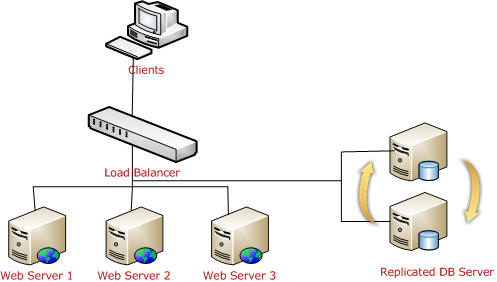
Load
balancing is the process of redistributing the work load among nodes of the distributed system
to improve both resource utilization
and job response time while also avoiding a situation where some nodes are heavily loaded
while others are idle or doing
little work. A dynamic load balancing algorithm assumes no a priori knowledge about job behavior
or the global state of the
system, i.e., load balancing decisions are solely based on the current status of the system. The
development of an effective dynamic
load balancing algorithm involves many important issues: load estimation, load
levels comparison, performance indices,
system stability, amount of information exchanged among nodes, job resource
requirements estimation, job’s selection
for transfer, remote nodes selection, and more. This paper presents and analyses the aforementioned
issues that need to
be considered in the development or study of a dynamic load balancing algorithm.
In this
paper an extensive review of the most important issues related to the development
of dynamic load balancing algorithms for multicomputer distributed systems was
presented. Load estimation, load levels comparison, performance indices,
stability, amount of information exchanged among nodes, job resource requirements
estimation, job selection for transfer, remote nodes selection, are some of the
issues that have been discussed. Our objective is to provide a guide to the critical
issues that need to be addressed while the development or study of a dynamic
load balancing algorithm.


 Hello, my name is Jack Sparrow. I'm a 50 year old self-employed Pirate from the Caribbean.
Tidak ada komentar:
Posting Komentar
Silakan tinggalkan kritik dan saran